

Many dog owners wonder, “Can dogs get poison ivy?” when they spot their furry friend wandering through wooded areas or brushy trails. Yes, dogs can get poison ivy, but it’s much less common than in humans because their thick fur protects most of their skin from direct contact with the plant’s oils. However, the real concern is that dogs can carry these harmful oils on their fur and transfer them to you.
Understanding how poison ivy affects our four-legged companions is important for every pet owner. Dogs can develop skin irritation in areas with less fur, like their belly, nose, or paw pads. They can also get sick if they eat the plant.
We’ll explore how to spot the signs of poison ivy exposure in dogs, what steps to take if your pet encounters these plants, and how to protect both you and your dog from this common outdoor hazard. You’ll also learn practical prevention tips to keep your walks safe and enjoyable.
Key Takeaways
- Dogs can get poison ivy but it’s rare due to their protective fur coating
- Watch for skin irritation on areas with less fur like the belly and paws
- Wash your dog immediately after poison ivy exposure to prevent oil transfer to humans
Can Dogs Get Poison Ivy?
Dogs can get poison ivy, but it happens much less often than in humans. The main danger is that dogs can carry poison ivy oils on their fur and pass them to their owners.
How Poison Ivy Affects Dogs
Dogs have thick fur that protects their skin from poison ivy oils. This natural barrier makes it hard for the plant’s oils to reach their skin and cause problems.
Most dogs don’t get rashes from poison ivy because their coat blocks the oils. The oils need direct contact with skin to cause reactions.
When dogs do get affected, it happens in these areas:
- Nose and mouth area
- Belly where fur is thinner
- Paw pads
- Areas with cuts or scrapes
The biggest risk is that dogs become carriers of poison ivy oils. When your dog walks through poison ivy, the oils stick to their fur. These oils can stay active for hours or even days.
If you pet your dog after they’ve been in poison ivy, you can get the oils on your hands. This can cause a rash on you even though your dog seems fine.
Symptoms of Poison Ivy Exposure in Dogs
Dogs show different signs than humans when they touch poison ivy. The symptoms are often mild and hard to spot at first.
Common symptoms include:
- Red, irritated skin
- Scratching more than usual
- Small bumps or blisters
- Swelling around the face or paws
- Excessive licking of affected areas
The rash usually shows up 12 to 48 hours after contact. It appears most often on areas with less fur coverage.
Some dogs might rub their face on the ground if their nose or mouth area is irritated. Others may seem uncomfortable when walking if their paw pads are affected.
Watch for these serious signs:
- Difficulty breathing
- Severe swelling
- Loss of appetite
- Lethargy
These symptoms need immediate vet care.
Do Different Dog Breeds React Differently?
All dogs can get poison ivy, but some breeds face higher risks than others. Coat type and skin sensitivity play important roles.
Higher risk breeds include:
- Hairless breeds (Chinese Crested, Xoloitzcuintli)
- Short-haired breeds (Beagles, Boxers, Pit Bulls)
- Breeds with thin coats (Whippets, Greyhounds)
These dogs have less fur protection, making skin contact more likely.
Lower risk breeds include:
- Double-coated breeds (Golden Retrievers, German Shepherds)
- Breeds with thick, dense fur (Poodles, Bernese Mountain Dogs)
- Long-haired breeds (Afghan Hounds, Collies)
Their thick coats act as better barriers against poison ivy oils.
Dogs with allergies or sensitive skin may react more strongly to poison ivy regardless of breed. Age also matters – puppies and senior dogs often have more sensitive skin than healthy adult dogs.
Recognizing, Treating, and Preventing Poison Ivy in Dogs
Knowing how to identify poison ivy plants and recognizing symptoms in dogs helps protect your pet from discomfort. Quick treatment and smart prevention strategies keep dogs safe from this irritating plant.
Identifying Poison Ivy Plants
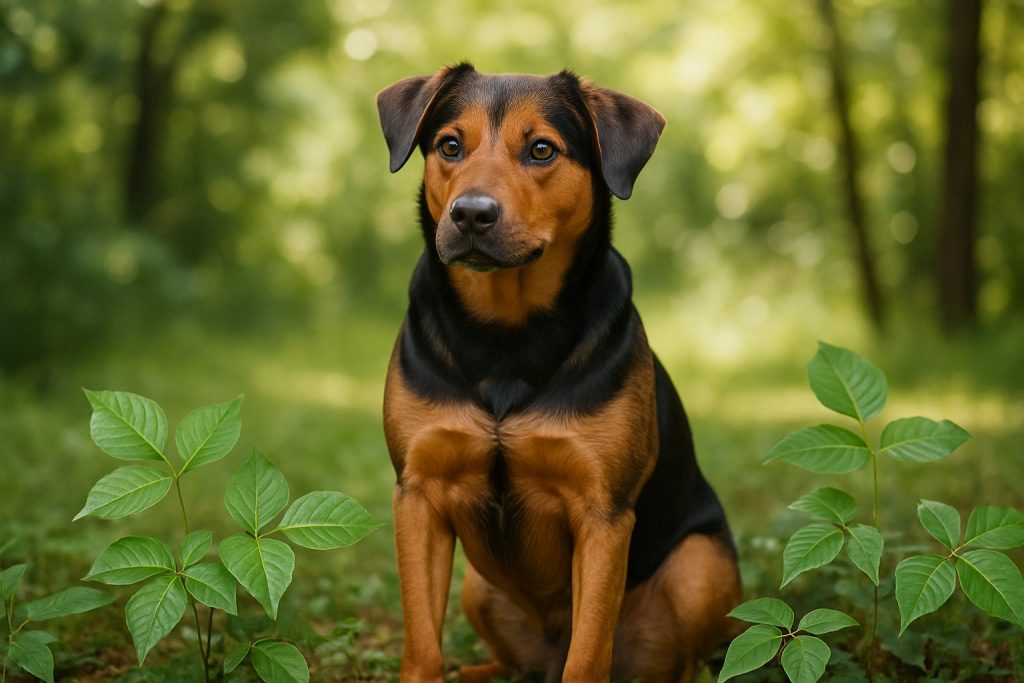
Poison ivy grows as a vine, shrub, or ground cover throughout North America. The plant has three leaflets on each stem, which is why people say “leaves of three, let it be.”
The leaves change color with the seasons. In spring and summer, they appear bright green. During fall, the leaves turn red, orange, or yellow.
Key identification features:
- Three leaflets per stem
- Shiny or waxy leaf surface
- Smooth or slightly toothed leaf edges
- White or gray berries in late summer
Poison ivy thrives in wooded areas, fields, and along fence lines. It often grows up trees or spreads across the ground. The plant can reach several feet tall when growing as a shrub.
Treatment Options for Affected Dogs
Dogs with poison ivy need immediate washing to remove the irritating oils. Use lukewarm water and mild dish soap to clean the affected areas.
Basic treatment steps:
- Bathe your dog within 2 hours of exposure
- Rinse thoroughly with cool water
- Apply aloe vera gel made for pets
- Keep your dog from scratching the area
Oatmeal baths help soothe irritated skin. Mix plain oatmeal with warm water to create a paste. Apply this mixture to the affected areas for 10-15 minutes before rinsing.
Cold compresses reduce swelling and itching. Wrap ice in a towel and apply for short periods. Never put ice directly on your dog’s skin.
Prevention Tips for Dog Owners
Learning where poison ivy grows helps you avoid these areas during walks. Stay on cleared trails and keep dogs on leashes in wooded areas.
Prevention strategies:
- Check your yard for poison ivy regularly
- Remove poison ivy plants safely with gloves
- Wash your dog’s paws after outdoor activities
- Choose open areas for off-leash play
Create poison ivy-free zones in your yard. Remove plants by digging up roots while wearing protective clothing. Spray the area with white vinegar to prevent regrowth.
Train your dog to stay on paths during hikes. Reward them for walking beside you instead of exploring dense vegetation.
When to Consult a Veterinarian
Most poison ivy cases in dogs heal without professional treatment. However, some situations require veterinary care.
Call your vet if you notice:
- Severe swelling around the face or eyes
- Open wounds from scratching
- Signs of infection like pus or bad smells
- No improvement after 3-4 days
Dogs that scratch constantly may develop hot spots or secondary infections. These conditions need prescription medications to heal properly.
Breathing problems or extreme lethargy require immediate attention. While rare, some dogs may have severe allergic reactions to poison ivy exposure.
Frequently Asked Questions
Dog owners often have specific concerns about poison ivy exposure and its effects on their pets. Most dogs experience mild reactions compared to humans, but proper identification of symptoms and treatment methods remain important for pet safety.
What are the signs of poison ivy irritation in dogs?
Dogs with poison ivy exposure typically show red, irritated skin in areas with less fur coverage. We see the most obvious signs around the belly, inner thighs, and paw pads where skin contact occurs directly.
Excessive scratching and licking are common early warning signs. Dogs may focus their attention on specific body areas that feel itchy or uncomfortable.
Some dogs develop small bumps or blisters on exposed skin. The irritation usually appears within 12 to 48 hours after contact with the plant.
How can you treat a dog’s exposure to poison ivy?
We recommend giving your dog a bath with cool water and mild dish soap immediately after suspected exposure. This helps remove the urushiol oil before it fully absorbs into the skin.
Rinse thoroughly to remove all soap residue. Pat the fur dry gently rather than rubbing to avoid spreading any remaining oils.
Contact your veterinarian for proper treatment recommendations. They may suggest antihistamines or topical treatments based on your dog’s specific reaction severity.
Are certain breeds more susceptible to poison ivy than others?
Dogs with shorter coats face higher risk because their skin has less natural protection. Breeds like Pit Bulls, Boxers, and Whippets may experience more direct plant contact.
Smaller dogs that walk closer to ground-level vegetation encounter poison ivy more frequently. Their size puts them in direct contact with low-growing plants during walks.
However, any dog can develop poison ivy reactions regardless of breed. The amount of fur coverage and individual sensitivity matter more than specific breed characteristics.
Can humans transmit poison ivy oils to their pets?
We can transfer urushiol oil from our skin or clothing to our dogs through direct contact. The oil remains active on surfaces for extended periods.
Dogs can pick up poison ivy oils from contaminated gardening tools, hiking gear, or outdoor furniture. These indirect exposures happen when we bring contaminated items into our homes.
Washing hands and changing clothes after outdoor activities helps prevent oil transfer. Clean any tools or equipment that may have touched poison ivy plants.
What should I do if my dog’s face has been exposed to poison ivy?
Facial exposure requires immediate veterinary attention because of the sensitive eye and mouth areas. We need professional guidance to avoid causing additional irritation.
Rinse the face gently with cool water if possible. Avoid getting water directly in the eyes or forcing your dog to cooperate if they resist.
Watch for signs of swelling around the eyes, nose, or mouth. These symptoms indicate a more serious reaction that needs prompt medical treatment.
Is it safe to administer over-the-counter medication to a dog for poison ivy reactions?
Never give human medications to dogs without veterinary approval. Many common human treatments contain ingredients that are toxic to pets.
We should avoid using topical creams or ointments designed for people. Dogs tend to lick treated areas, which can lead to ingestion of harmful substances.
Contact your veterinarian before giving any medication. They can recommend safe dosages of appropriate treatments based on your dog’s weight and health status.